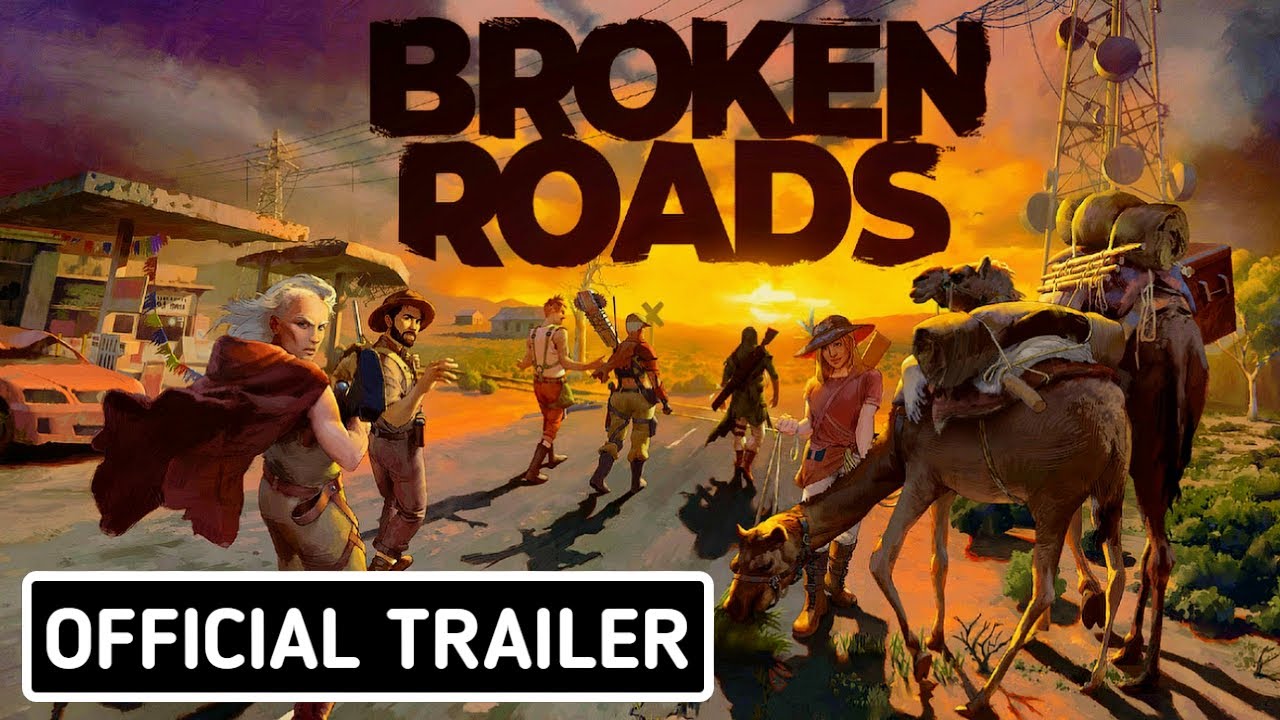
Keep Your Eyes On The Horizon – Broken Roads Preview
Broken Roads is a game that took inspiration and an author from Fallout 2. Delayed to 2024, Broken Roads is just a few more patches away from being a fantastic game. If you’re curious about its current state…
…well, look no further. We have been closely following the game’s development, and the team gave us a chance to publish a preview. It seems like we have one more reason to love Drop Bear Bytes!

First and foremost, the team has made a good amount of progress since releasing the demo of Broken Roads. They’ve truly listened to the feedback they received during this period. For instance, the Moral Compass system no longer restricts players; in fact, it helps facilitate versatile role-playing, just as initially planned. The game’s storytelling was expected to shine, and indeed, it has become a captivating experience that immerses players and keeps them engaged with its narrative.


In summary, if you’re a fan of story-driven isometric RPGs, add Broken Roads to your Steam wishlist and keep an eye on it. If you’re thinking, “No way, I can’t wait for 2024! I need a story-driven game right now!” then let me guide you to this article.
For our remaining readers, let me share a few features of the game without spoiling its surprises. This way, I can stand behind my claim that the game is worth the wait and play.

Why Anticipate Broken Roads?
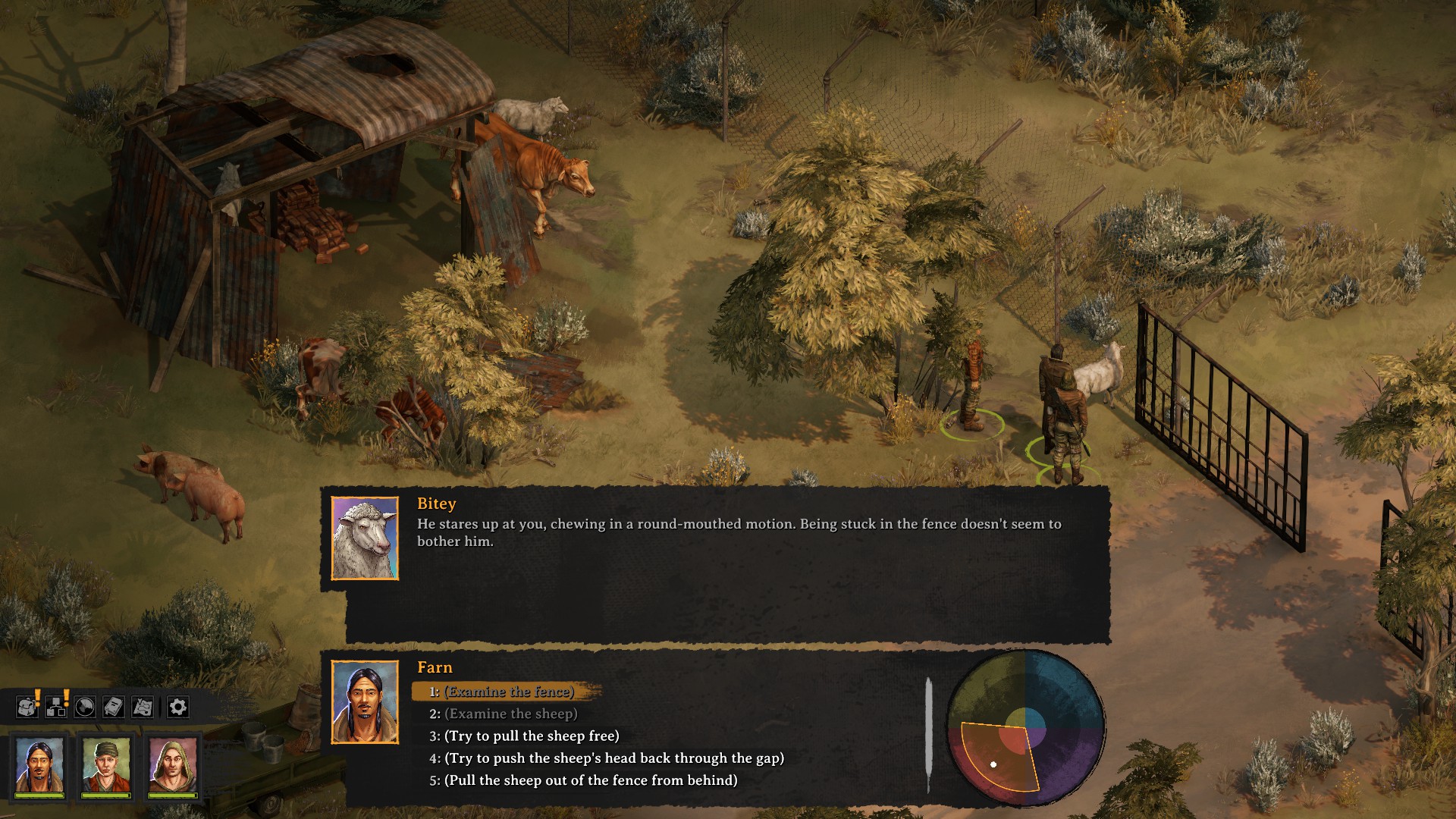
We are fans of fantasy role-playing games, and Broken Roads truly provides an opportunity for role-playing. Moreover, it doesn’t limit us to playing just a good or bad character. We constantly decide how we want our character to be in the morally gray areas. Whatever we choose, the story continues, but every action comes with a consequence. Altruistic deeds may lead to disaster, while selfish actions could bring rewards for everyone. A Utilitarian, thinking of everyone’s well-being, can ruthlessly violate the rights of an individual, while a humanitarian may be as useful as a piece of chewed gum that someone else discarded in some situations.
Let me share a scene that amused me: Entering a region and intending to explore, I’m scanning the entire map with the mouse, clicking on every clickable spot. At the end of the investigation, I have little information in my hands. Ready to leave the map, one of my companions asks, “Did you find anything important?” A feeling of doubt hits me, “Hold on, let me look again,” I say, and in this re-scan, I discover a new detail. Okay, ready to leave this time. The companion asks, “Are we going then?” COME ON! We don’t have any information, task, or reason to be here. We stumbled upon this place while walking, got curious, and investigated. Did I search for everything that needed to be investigated? Did I click on everything clickable? I don’t know! Maybe the companion innocently asks, just to be psychologically prepared for the long walk ahead. This occasional lack of direction in the game, not guiding us with quest markers and detailed steps, provides a realistic and enjoyable role-playing opportunity.
Sound, Music, and Emotions
I mentioned before that Tim Sunderland, the audio lead at Drop Bear Bytes invented musical instruments using materials he thought wouldn’t be hard to find in a post-apocalyptic setting. I thought they were invented only to inspire the game’s soundtracks. However, they’ve also integrated these instruments into the game itself! Moreover, we can interact with these instruments and hear how they sound.

The voice acting is also well done. In Broken Roads, we can connect with NPCs traveling with us. We can feel and empathize with them. Additionally, Broken Roads manages to be a game that we can get lost in for hours.
What Have They Added to the Game Since the Demo?
Unfortunately for us, the game doesn’t have Turkish language support. Moreover, using Australian English may alienate even those who are confident in American English. Drop Bear Bytes assured us before that we shouldn’t worry about this, and during the preview, I learned why. They added explanations for all terms that might be unfamiliar to us, as seen in the image below. Thanks to Broken Roads, we will not only become familiar with Australia’s towns, humor, and culture but also its language.

I had the chance to try out the new origin stories during the preview. The demo only allowed us to play as a Hired Gun. This time, I chose the Surveyor—a wandering adventurer and cartographer reporting on what’s happening in each region. Morally, I adopted a Machiavellian view—whatever is necessary for my survival is permissible. I was pleased to see that many things in the game changed, from the reason for my arrival at Bally Bally Hall to what topics I could discuss with people, based on my character’s choices.
By the way, as a successful Surveyor, you can discover various references. (Hint: Contemplating the relationship between solar panels and darkness is possible.)
In summary, Broken Roads is not one of those shallow RPGs that set out with big dreams and get stuck on the road when the engine breaks down. It is set to please both isometric RPG enthusiasts and those who have a soft spot for Fallout. It might not have a groundbreaking effect as Disco Elysium or Baldur’s Gate 3, but with features like the moral compass system, fun and diverse quests, and the freedom it gives us in the heart of Australia, it will undoubtedly win your heart.


Why Was it Delayed, What Was Missing?
They haven’t had enough opportunity to thoroughly test some mechanics, decisions, and character types.
For example, there’s a personality trait called “Better Feared Than Loved.” You can become the kind of troublemaker that no one wants to mess with. Therefore, in every fight you enter, there’s a 50% chance that enemies will fear you and run away. Thematically fantastic, but gameplay-wise, it’s an unbalanced feature. While everyone turns their backs on you and runs away, you’re shooting them in the back. This loses its fun after a point. Therefore, they need to reduce the ratio or adjust the game mechanics.
Broken Roads is visually stunning. Both the details and the style of its visuals make examining every inch of the maps enjoyable. However, the animations aren’t as fantastic yet. Moreover, some part of the storytelling is done through animations without dialogue. Just as we sometimes nod instead of speaking, the game has such non-verbal interactions. (Which, in my opinion, is an amazing choice.) So, places where the animation is not fluid are a bit noticeable in the game’s current state.

Essentially, the combat system needs adjustment. We discussed in our interview that they redesigned the combat mechanics from scratch. Therefore, they haven’t had enough opportunity to thoroughly test these mechanics as well as they did with the rest of the game. If you remember, the weapons used, whether or not you’re drunk, and even the character’s traits affect fights (like enemies running away from you), so there are many scenarios to test.
Uncle Jack Charles’s voice was also missing… I hoped to hear more of the late great voice actor in the game.
Lastly, hats were missing! One of the biggest shortcomings of a game is not allowing players to wear hats, especially when other characters can stroll around wearing cool ones.
Is Delay Good for the Game?
Yes, we think so! Because these issues I mentioned are not un-fixable bugs or shortcomings. When they are fixed, we will enjoy playing Broken Roads. Rather than our enjoyment being spoiled by encountering bugs while playing and waiting for a patch frustrated, I think it’s better to keep waiting for a strong release.
The story and quests are already fun, you’ll like them. They just need to make sure that players won’t trip up with mechanical glitches during their journey on these broken roads…